If this is true, and certainly sounds appropriate, then once the air expels itself, no more to come? Why not at that point sand/repair surface, repaint and have no more problem-rather than replacing with new door, which apparently has same defective air trapping to repeat cycle? Just a thought; if/when this occurs to my car will think hard about this approach. If not all expelled first repair, and few more appear, than repeat.I would say that if the car is in a changing temperature environment, it might make them appear a little more quickly. Both of my replaced sets were nine months. One set whilst garaged, the other set when always kept outside.
It is only my theory of course but speaking as someone who manufactures composites, I think that air is trapped in there to begin with, and is left there in the compression moulding process and importantly the bubbles are pressurised. So they will find their way out through the surface eventually.
Navigation
Install the app
How to install the app on iOS
Follow along with the video below to see how to install our site as a web app on your home screen.
Note: This feature may not be available in some browsers.
More options
Style variation
You are using an out of date browser. It may not display this or other websites correctly.
You should upgrade or use an alternative browser.
You should upgrade or use an alternative browser.
Paint blistering issue update
- Thread starter seventen
- Start date

I've had a good look at a door that was removed for replacement, because of blistering.
Whilst I know the locations of blistering has been shown to vary, and 'can' appear anywhere, by far the most common location seems to be centred around two horizontal rows of blisters that run along the door, around an inch below the window seal line, and the second row around two inches below that.
On the inside of the door, is a composite stiffener thats bonded to the inner surface. It has a joggle in it's form, that also plays the role of securing the bottom edge of the rubber window seal.
It's very clear on close inspection that the channel that this forms acts like a tiny gutter, in which water will 'sit'.
It's my opinion that any water that gets past the window seal and runs down the inside of the door skin, and sits in the gutter-like track, seeps into the unsealed inner door skin surface (osmosis style), likely reacts with chemicals within the laminate, and ultimately finds its way out of the outer skin surface, under the paint, forming blisters.
It appears, by the common dual rows of blisters, that this also happens at the lower edge of the stiffener, with water possibly just being held there via capillary action.
It certainly seems logical that two parallel runs of lingering moisture on the inner (unsealed) surface, presenting as blisters directly adjacent on the outer surface, suggests the blisters are related to the water present on the opposite side of the skin.
I plan to remove the window, regulator, seal etc, and go in with a dremel multifunction tool to grind out small gaps in the upper joggle to form drains, so no water is trapped, and also to seal the inner door skin with 2-pack paint, especially in the upper & lower 'water traps', in an attempt to stop this water ingress into the back face of the composite material. To clarify, I will seal the entire inner surface of the door skin, and address the gutter issue caused by the stiffener.
It will be important to not only remove the gutter trap element (a huge design fault IMHO), but also to ensure satisfactory sealing of the creavis where the stiffener is bonded to the door skin.
If I'm right about this, storing your car in a garage won't help, as the water that accumulates in that trap every time it rains, or you wash your car, is still sitting there, possibly for weeks, trying to find it's way into your door skin via the back (porous) door.... in fact, if you live in a hot, dry climate, there's much better chance of this moisture drying out before it does harm, if left outside in the sun, than indoors.
I don't use a hose, when washing my Emira, or any other method with copious amounts of water. I use a micro-fibre mitt with minimal soapy water (wrung out), wipe the car, wipe again with it rinsed, then leather it, using this method, no water runs down the inside of that door skin.... at least until i've done my mods.
I appreciate I shouldn't have to take this ridiculous precaution, but until I'm sure I've addressed what I believe to be the cause, it's what I will continue to do.
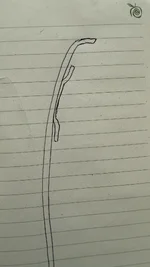
I've drawn a rubbish sketch showing a section of the door skin, and the stiffener, showing how the upper bit is deff a water trap, and the lower bit likely holds water by capillary.
The proper fix would of course be for Lotus (or Tejin) to completely seal the inner door skin surface (actually ALL inner skin surfaces of the composite panels) during manufacture 'BEFORE' bonding the stiffener in place.... Or to develop a less reactive composite laminate. .... But that won't be happening for my Emira, so I guess I'm on my own.
P.S. My Emira is now 2.5 years old, and so far, no blisters at all... but it never goes out in the wet (unless I get caught out) and is garaged/pampered.
Whilst I know the locations of blistering has been shown to vary, and 'can' appear anywhere, by far the most common location seems to be centred around two horizontal rows of blisters that run along the door, around an inch below the window seal line, and the second row around two inches below that.
On the inside of the door, is a composite stiffener thats bonded to the inner surface. It has a joggle in it's form, that also plays the role of securing the bottom edge of the rubber window seal.
It's very clear on close inspection that the channel that this forms acts like a tiny gutter, in which water will 'sit'.
It's my opinion that any water that gets past the window seal and runs down the inside of the door skin, and sits in the gutter-like track, seeps into the unsealed inner door skin surface (osmosis style), likely reacts with chemicals within the laminate, and ultimately finds its way out of the outer skin surface, under the paint, forming blisters.
It appears, by the common dual rows of blisters, that this also happens at the lower edge of the stiffener, with water possibly just being held there via capillary action.
It certainly seems logical that two parallel runs of lingering moisture on the inner (unsealed) surface, presenting as blisters directly adjacent on the outer surface, suggests the blisters are related to the water present on the opposite side of the skin.
I plan to remove the window, regulator, seal etc, and go in with a dremel multifunction tool to grind out small gaps in the upper joggle to form drains, so no water is trapped, and also to seal the inner door skin with 2-pack paint, especially in the upper & lower 'water traps', in an attempt to stop this water ingress into the back face of the composite material. To clarify, I will seal the entire inner surface of the door skin, and address the gutter issue caused by the stiffener.
It will be important to not only remove the gutter trap element (a huge design fault IMHO), but also to ensure satisfactory sealing of the creavis where the stiffener is bonded to the door skin.
If I'm right about this, storing your car in a garage won't help, as the water that accumulates in that trap every time it rains, or you wash your car, is still sitting there, possibly for weeks, trying to find it's way into your door skin via the back (porous) door.... in fact, if you live in a hot, dry climate, there's much better chance of this moisture drying out before it does harm, if left outside in the sun, than indoors.
I don't use a hose, when washing my Emira, or any other method with copious amounts of water. I use a micro-fibre mitt with minimal soapy water (wrung out), wipe the car, wipe again with it rinsed, then leather it, using this method, no water runs down the inside of that door skin.... at least until i've done my mods.
I appreciate I shouldn't have to take this ridiculous precaution, but until I'm sure I've addressed what I believe to be the cause, it's what I will continue to do.
I've drawn a rubbish sketch showing a section of the door skin, and the stiffener, showing how the upper bit is deff a water trap, and the lower bit likely holds water by capillary.
The proper fix would of course be for Lotus (or Tejin) to completely seal the inner door skin surface (actually ALL inner skin surfaces of the composite panels) during manufacture 'BEFORE' bonding the stiffener in place.... Or to develop a less reactive composite laminate. .... But that won't be happening for my Emira, so I guess I'm on my own.
P.S. My Emira is now 2.5 years old, and so far, no blisters at all... but it never goes out in the wet (unless I get caught out) and is garaged/pampered.
Attachments
Last edited:
The panels for the Emira are produced for Lotus by Teijin from sheet molding compound (SMC).
SMC contains styrene as a reactive monomer and is most likely the root cause of the reason for the paint bubbling that occurs in the painted panels.
If any of the panels are under-cured during processing, eventually the styrene will migrate through the panels causing blistering.
Even if fully/properly cured, there is always some unreacted monomer that remains in the cross-linked panel.
As a graduate trained polymer chemist, this is more likely to be the root cause of the unfortunate problems some Emira owners have encountered.
SMC contains styrene as a reactive monomer and is most likely the root cause of the reason for the paint bubbling that occurs in the painted panels.
If any of the panels are under-cured during processing, eventually the styrene will migrate through the panels causing blistering.
Even if fully/properly cured, there is always some unreacted monomer that remains in the cross-linked panel.
As a graduate trained polymer chemist, this is more likely to be the root cause of the unfortunate problems some Emira owners have encountered.

go in with a dremel multifunction tool to grind out small gaps in the upper joggle to form drains
Interesting. Is this (grind out holes in red) what you have in mind?
Interesting. Is this (grind out holes in red) what you have in mind?
View attachment 75603
Yes, though I was going to grind out right to the top, leaving an open V, or curved V, going in as deep as I dare, ie, in until I kiss the adhesive holding the stiffener to the skin. simply to make it easier, as the rubber window seal doesn't need a continuous edge to that lip for location, it can be interrupted.
That stiffener btw, isn't a straight parralell thing, it curves with the window line, so has a low point towards the front of the door where the water will gravitate to, so would deff need a drain at that lowest location (see pic).
In the door carcass I examined, you could easily see the dried dust, and obvious evidence of water having been sitting there, particularly at that low point towards the front... As plain as the nose on your face.
The thing is, even with the drains cut into it, that groove, with a rubber seal snug in it, is gonna hold water/moisture by capillary, so it really needs pulling apart (the rubber out), cleaning up really well, and properly sealing with a 'suitable' agent, in addition to being given a chance to naturally drain.
Attachments

Last edited:
I haven't seen the thing so can't say for sure, but I would go against a fully open V. The reinforcement beam has a purpose, and cutting out a V, especially at the apex of a curve would undermine the structural integrity of the part. A draining hole will do that too, but to a lesser extent.Yes, though I was going to grind out right to the top, leaving an open V, or curved V, going in as deep as I dare, ie, in until I kiss the adhesive holding the stiffener to the skin. simply to make it easier, as the rubber window seal doesn't need a continuous edge to that lip for location, it can be interrupted.
That stiffener btw, isn't a straight parralell thing, it curves with the window line, so has a low point towards the front of the door, so would deff need a drain at that lowest location (see pic).
In the door carcass I examined, you could easily see the dried dust, and obvious evidence of water having been sitting there, particularly at that low point towards the front... As plain as the nose on your face.
Please share pictures! My car is booked for mid-Feb, and I would like to have something to give the dealer to think about...
As a graduate trained polymer chemist, this is more likely to be the root cause of the unfortunate problems some Emira owners have encountered.
OK.
It's not 'some' owners though, this is a real issue here in the UK. The backyard at my local Lotus garage is stacked with old removed blistered doors and the volume is staggering! My man at that garage is of the opinion that this will come to pass for ALL Emiras that are exposed to the trigger, that he also believes to be water... be it rain, or hose derived.
Also, if it's not water triggered, why are 90+% of the blisters we see, occurring along those two exact lines, adjacent to the stiffener? Surely they'd be more random if this was a failed curing thing?
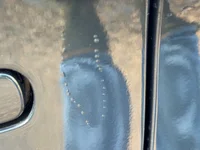
You can just about see the distinct lines of blisters on the video... They are exactly where the stiffener is bonded on the inner face of the skin.
This was parked at my local dealer.
Something else that has caught my eye, is that these blisters often appear to be aligned with what looks like a bit of bad paint prep, ie, a line where a sanding process has taken place, and the line between paint laminates is visible... like you sometimes see with a poor repair, and the transition between filler & primer/paint shows through.
I did wonder if maybe the stiffener sometimes pulls the door skin slightly when the bonding cures (I see this a lot with boats), enough to be a visible fault, and the paint shop then sand the outer skin to lose that defect prior to painting, and in doing so, they somehow interrupt the skin properties of the composite, which in turn somehow invites the blistering? Just a thought.
Last edited:
I actually think the main purpose of that stiffener is to provide a groove into which the rubber window seal locates, rather than a traditional panel stiffener, because the form of the door skin is such that it's a pretty rigid item in it's own right (due mainly to the large scoop form, into that rear intake), but I get where you're coming from.I haven't seen the thing so can't say for sure, but I would go against a fully open V. The reinforcement beam has a purpose, and cutting out a V, especially at the apex of a curve would undermine the structural integrity of the part. A draining hole will do that too, but to a lesser extent.
Please share pictures! My car is booked for mid-Feb, and I would like to have something to give the dealer to think about...
That joggle only has a gap behind it of maybe 1/8" (3mm), so wouldn't offer much stiffness in that plane.
I was certain I took pics of this when looking, but can't find them on my phone, so think I might have deleted them :-/
Last edited:

Do you need to seal the door skin - isn't the inner skin of the door already sealed?I plan to remove the window, regulator, seal etc, and go in with a dremel multifunction tool to grind out small gaps in the upper joggle to form drains, so no water is trapped, and also to seal the inner door skin with 2-pack paint, especially in the upper & lower 'water traps', in an attempt to stop this water ingress into the back face of the composite material. To clarify, I will seal the entire inner surface of the door skin, and address the gutter issue caused by the stiffener.
I think if the solution was as easy as adding a few drainage holes then Lotus would be doing it already but worth trying I think, at least it'll be interesting to know if you do get blistering after doing all of this (obviously if you don't we haven't learnt anything).
Seeing as '25 cars are still getting the problem and the problem is re-occurring on replacement doors I don't think the problem is fixed yet - I'm thinking that it'll happen to all/most Emiras too eventually (although I don't think it is water based).My man at that garage is of the opinion that this will come to ALL Emiras that are exposed to the trigger, that he also believes to be water... be it rain, or hose derived.
Last edited:

My passenger door has got a lot worse during this frosty weather. I’m in the UKI would say that if the car is in a changing temperature environment, it might make them appear a little more quickly. Both of my replaced sets were nine months. One set whilst garaged, the other set when always kept outside.
It is only my theory of course but speaking as someone who manufactures composites, I think that air is trapped in there to begin with, and is left there in the compression moulding process and importantly the bubbles are pressurised. So they will find their way out through the surface eventually.

I think if the solution was as easy as adding a few drainage holes then Lotus would be doing it already ....
There are a lot of things that one would think Lotus would be doing already, but they don't.
Put more simply, do you think it's a good idea/design, to have a structure that traps water and holds that water against the back face of an unsealed composite panel potentially indefinitely?... I don't.
Last edited:
I can only go by how it looks, and it looks, pretty 'dry' and porous.Do you need to seal the door skin - isn't the inner skin of the door already sealed?
I'm pretty sure sealing it won't be adding any problems, and wouldn't dream of having the door apart to that degree without attempting to sealing it in some way.
All I can say is, mine is 2.5 years old, never sees any water, and doesn't have an issue yet.
Looks like Mr Tillet has seen two full cycles of 9 months, and although he garaged it for one of those cycles, I'd like to know more about his washing routine (not his personal hygene), and how often it would get washed, then left garaged (where that trapped water would fester, undisturbed). Also, the exact location of his blisters (again, not his personal blisters)
Last edited:

OK.
It's not 'some' owners though, this is a real issue here in the UK. The backyard at my local Lotus garage is stacked with old removed blistered doors and the volume is staggering! My man at that garage is of the opinion that this will come to pass for ALL Emiras that are exposed to the trigger, that he also believes to be water... be it rain, or hose derived.
Also, if it's not water triggered, why are 90+% of the blisters we see, occurring along those two exact lines, adjacent to the stiffener? Surely they'd be more random if this was a failed curing thing?
You can just about see the distinct lines of blisters on the video... They are exactly where the stiffener is bonded on the inner face of the skin.
This was parked at my local dealer.
Something else that has caught my eye, is that these blisters often appear to be aligned with what looks like a bit of bad prep, ie, a line where a sanding process has taken place, and the line between paint laminates is visible... like you sometimes see with a poor repair, and the transition between filler & primer/paint shows through.
I did wonder if maybe the stiffener sometimes pulls the door skin slightly when the bonding cures (I see this a lot with boats), enough to be a visible fault, and the paint shop then sand the outer skin to lose that defect prior to painting, and in doing so, they somehow interrupt the skin properties of the composite, which in turn somehow invites the blistering? Just a thought.
Would be interesting to get hold of an old door and do an autopsy on it

I would need my wife to comment on my personal hygiene as she seems to be an expert on that.I can only go by how it looks, and it looks, pretty 'dry' and porous.
I'm pretty sure sealing it won't be adding any problems, and wouldn't dream of having the door apart to that degree without sealing it.
All I can say is, mine is 2.5 years old, never sees any water, and doesn't have an issue yet.
Looks like Mr Tillet has seen two full cycles of 9 months, and although he garaged it for one of those cycles, I'd like to know more about his washing routine (not his personal hygene), and how often it would get washed, then left garaged (where that trapped water would fester, undisturbed). Also, the exact location of his blisters (again, not his personal blisters)
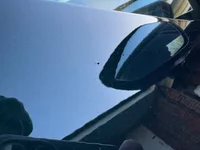
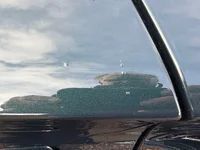
Concerning the car washing regime, in my old house it was washed by hand because my jet wash was broken and on a slope, which If done when the car was pointing uphill it would retain water in the bottom of the doors and if downhill would drain. Mostly it was stored in a garage though. After nine months I had them randomly on the top of the doors and a ring of bubbles the other side of the handle. This interested me as when you mould in a two sided tool and get a miss fill, you can try and recover the moulding by putting a bit of resin in the dry spot and closing the tool again, this ring of bubbles is what you get.
The second time it happened the car was now parked at the new house. Always on the flat, outside and never garaged. By now I had a jet wash. With our processes we do not get mouldings back for any air bubble reasons and we have made body panels for Caterham for years. Not just the seats. The only thing we have had is UV damage, which when combined with water damages the surface. But that was with uncoated epoxy mouldings, never polyester or vinylester and the inside is always perfect.
I will be interested to see if stopping any water retention works but I doubt it's that. It is far more likely that the air appears due to the temperature going up and down and its exercising the pressurised bubbles out of the composite. I think the lines would be more definite if it was water trapped and the ones that appear on the top of the rear wings are not likely to be water entrapment. (I've had those done too.)
Attachments
OK, well you may well be right, though mine has been through some fairly high cycles in temp. I've done two trips to southern europe, both with temps topping 40c (43C in Rome last summer) and a few cold ish periods back home (-6c last night), and all still well 30 months in.I will be interested to see if stopping any water retention works but I doubt it's that. It is far more likely that the air appears due to the temperature going up and down and its exercising the pressurised bubbles out of the composite. I think the lines would be more definite if it was water trapped and the ones that appear on the top of the rear wings are not likely to be water entrapment. (I've had those done too.)
I guess time will tell, but I'll deff be doing my anti-water trap and door panel inner skin sealing mods, and hoping for the best.

PS. looking at your pics, yours too has that line in the paint that the blisters seem centred on, that looks like a sanded filler circle (as I tried badly to explain in an earlier post), it has that look of a sanded transition tween filler and sub layers of paint where they feather off to one another.
What a sad state of affairs

Last edited:

If you do this, please document the process, with lots of pictures.I've had a good look at a door that was removed for replacement, because of blistering.
Whilst I know the locations of blistering has been shown to vary, and 'can' appear anywhere, by far the most common location seems to be centred around two horizontal rows of blisters that run along the door, a couple of inches below the window seal line, and the second row around two inches below that.
On the inside of the door, is a composite stiffener thats bonded to the inner surface. It has a joggle in it's form, that also plays the role of securing the bottom edge of the rubber window seal.
It's very clear on close inspection that the channel that this forms acts like a tiny gutter, in which water will 'sit'.
It's my opinion that any water that gets past the window seal and runs down the inside of the door skin, and sits in the gutter-like track, seeps into the unsealed inner door skin surface (osmosis style), likely reacts with chemicals within the laminate, and ultimately finds its way out, under the paint, forming blisters.
It appears, by the common dual rows of blisters, that this also happens at the lower edge of the stiffener, with water possibly just being held there via capillary action.
It certainly seems logical that two parallel runs of lingering moisture on the inner (unsealed) surface, presenting as blisters directly adjacent on the outer surface, suggests the blisters are related to the water present on the opposite side of the skin.
I plan to remove the window, regulator, seal etc, and go in with a dremel multifunction tool to grind out small gaps in the upper joggle to form drains, so no water is trapped, and also to seal the inner door skin with 2-pack paint, especially in the upper & lower 'water traps', in an attempt to stop this water ingress into the back face of the composite material. To clarify, I will seal the entire inner surface of the door skin, and address the gutter issue caused by the stiffener.
It will be important to not only remove the gutter trap element (a huge design fault IMHO), but also to ensure satisfactory sealing of the creavis where the stiffener is bonded to the door skin.
If I'm right about this, storing your car in a garage won't help, as the water that accumulates in that trap every time it rains, or you wash your car, is still sitting there, possibly for weeks, trying to find it's way into your door skin via the back (porous) door.... in fact, if you live in a hot, dry climate, there's much better chance of this moisture drying out before it does harm, if left outside in the sun, than indoors.
I don't use a hose, when washing my Emira, or any other method with copious amounts of water. I use a micro-fibre mitt with minimal soapy water (wrung out), wipe the car, wipe again with it rinsed, then leather it, using this method, no water runs down the inside of that door skin.... at least until i've done my mods.
I appreciate I shouldn't have to take this ridiculous precaution, but until I'm sure I've addressed what I believe to be the cause, it's what I will continue to do.
I've drawn a rubbish sketch showing a section of the door skin, and the stiffener, showing how the upper bit is deff a water trap, and the lower bit likely holds water by capillary.
The proper fix would of course be for Lotus (or Tejin) to completely seal the inner door skin surface (actually ALL inner skin surfaces of the composite panels) during manufacture 'BEFORE' bonding the stiffener in place.... Or to develop a less reactive composite laminate. .... But that won't be happening for my Emira, so I guess I'm on my own.
P.S. My Emira is now 2.5 years old, and so far, no blisters at all... but it never goes out the wet (unless I get caught out) and is garaged/pampered.
I just had a thought. Hopefully your warranty is over now, as making these changes - cutting in to the door frame and adding sealing paint to the door skin - might be a reason for Lotus to deny any warranty claim you make for the doors if you do get blisters later.I guess time will tell, but I'll deff be doing my anti-water trap and door panel inner skin sealing mods, and hoping for the best.
My warranty is up on August 31st 2026.
I plan to do this stuff at the height of the summer, when everything will be very dry, and of course, only if the doors are still completely free of blisters (so it's very much a precautionary measure to hopefully fix, and maintain a blister free car).
So, if by August my car is still blister free, and the warranty is about to end, that's when I'll do it.... unless of course, there have been court cases by then, that change the body warranty to the 5 years it's supposed to be.
I actually think my dealer would act sympathetically anyway, given the dreadful lotus reaction to these issues. I don't see that they'd have any vested interest in blocking such a warranty claim, just because I 'tried' to improve a dire prognosis, that Lotus seem to be failing to address properly. .. It's hardly a secret that there's a major manufacturing problem with these composite components on Emira.
I plan to do this stuff at the height of the summer, when everything will be very dry, and of course, only if the doors are still completely free of blisters (so it's very much a precautionary measure to hopefully fix, and maintain a blister free car).
So, if by August my car is still blister free, and the warranty is about to end, that's when I'll do it.... unless of course, there have been court cases by then, that change the body warranty to the 5 years it's supposed to be.
I actually think my dealer would act sympathetically anyway, given the dreadful lotus reaction to these issues. I don't see that they'd have any vested interest in blocking such a warranty claim, just because I 'tried' to improve a dire prognosis, that Lotus seem to be failing to address properly. .. It's hardly a secret that there's a major manufacturing problem with these composite components on Emira.
Last edited:


Emira Forum Photos
Emira Forum Photos
Similar threads

- Replies
- 62
- Views
- 7K

- Replies
- 46
- Views
- 5K


- Replies
- 1
- Views
- 1K
Supporting Vendors
View all →

📢 Support the vendors who support our community!
✉️ Become a Supporting Vendor


