Paint Blistering - US Based Cars?

Does your USA based Emira have paint blistering?

  • Yes

  • No


Results are only viewable after voting.
Can you list the manufacturer date found on the door sill.

Also, I would encourage anyone else who does in fact have blistering (and posts about it), to list their manufacturer date (all US cars have this on the door sill). This could help shed light on whether it's a parts issue, a painting issue (who paint batches were used then or "who" did the painting paint mixing, etc.). Also, list if it's stored outside or garaged.
I sold the car so can't get that info :)

Stored outside in California.
 
Is there a way to tell who has made the doors on a given car?
All doors on the Emira are made by Teijin. They also make all the engine cover/tailgates and rear quarters. Any replacements are also made by Teijin.
Front wings and bonnet are made by Lotus composites. Front and rear bumper are molded plastic not composite.
 
IMG_8393.webp
 
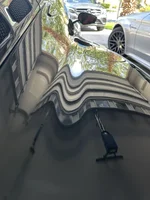
Given its location, that looks more like heat damage. Ask me how I know...
Could be but wouldn't heat damage be closer to the exhaust? Possible an impact has bent the plastic and lifted the paint?
It's not the paint blistering due to the composite panels though.
 
This looks like something not yet seen. That part is plastic, not composite. My guess would be impact or heat damage (but I’m not sure why it would overheat there). You don’t have an aftermarket exhaust do you?
 
This looks like something not yet seen. That part is plastic, not composite. My guess would be impact or heat damage (but I’m not sure why it would overheat there). You don’t have an aftermarket exhaust do you?
Next time you or anyone has the diffuser off, take a look at the heat shielding used. It's essentially cardboard with a thin layer of heat foil. The intense heat will transfer to whatever is closest.
 
Next time you or anyone has the diffuser off, take a look at the heat shielding used. It's essentially cardboard with a thin layer of heat foil. The intense heat will transfer to whatever is closest.
Heat shielding is meant to reflect radiated heat away from surfaces. Technically all you need is foil but practically it has to have some structure.
 
Have not posted here in a while but thought I would chime in. I had the same issue on my Emira. In fact, when I was getting it repaired (entire rear bumper replacement), there was another Emira in for the exact same issue in that same area. This does not seem to be a blistering issue, but some type of issue with the paint adhering to the plastic. Mine initially looked like @jeidmann and then the paint flaked off during a wash. Taken care of under warranty. Sorry for the not so great pic, don't have a close up and just had to crop another photo I had on my phone.

Don't want to take over the blistering paint thread so maybe these can be moved to something different if there is a lot of posts.
 

Attachments

  • RearBumper.webp
    RearBumper.webp
    267.6 KB · Views: 52
So now we are back to perhaps it is related to prep, primer or paint because these are definitely not composite panels.
 
Again, conclusively, we don't know.

This is the thing about forums, we sometimes start to assume things as fact when in "fact" they are "fake news". No one has conclusively confirmed what the composite panel paint adhesion failure (i.e., bubbling) root cause is.

I threw out a short list of variables that are a possibility (not conclusively the root cause, just potential sources). Now this new rear bumper problem which may be a different type of blistering but still deals with the same root failure (a break down of paint adhesion). So yeah, we are back to it potentially being "related to prep, primer or paint" or something else (Heat source proximity). The fact that paint failures are now essentially occurring on both composite and non-composite panels points to at least one other variable being involved in the root cause.

I simply say this not to argue but for people to investigate as much as they can when these problems come up in specific cases. I personally, still think the rear bumper paint failure is some how heat related, but again just my "theory." However, the paint, primer or other type of prep involved may also be in play given the panel now involved is in fact a "non-composite" panel.
 
I think you are conflating two different issues here.

The blistering on the panels even looks completely different from the lifted paint on the bumpers. I think if you had seen the panel blistering yourself you probably would not think it could be anything to do with the paint itself.

I have done plenty of investigation and there is overwhelming evidence (first hand in my case) and expert opinion from paint shops and composite manufacturers that the blistering problem on the Teijin panels is nothing to do with the paint. Also the fact that Lotus are replacing panels and not repainting them. Of course it is theoretically a paint adhesion problem that is what blistering is but it is not caused by a problem with the paint or primer.
As you state however despite all this Lotus have not confirmed anything.

When owners are out of warranty and need to go to small claims court in the UK to claim for an inherent manufacturing fault then claims that we don't know what is causing this won't help the cause.
 
"Of course it is theoretically a paint adhesion problem that is what blistering is but it is not caused by a problem with the paint or primer."

As I stated, not a paint problem, a paint PROCESS problem. End result being an adhesion problem. Paint to underlying material. Likely improper surface prep, and/or curing.
 
"Of course it is theoretically a paint adhesion problem that is what blistering is but it is not caused by a problem with the paint or primer."

As I stated, not a paint problem, a paint PROCESS problem. End result being an adhesion problem. Paint to underlying material. Likely improper surface prep, and/or curing.
The Teijin blistering problem we are having panels replaced for by Lotus is not caused by the paint or anything to do with the painting process.

For some context - as I realise I am sounding rather annoyed here - I have just come off the phone after a long conversation with a bodyshop specialising in composites about this very issue. It's the fourth bodyshop I have spoken to about this issue. All have with experience with this problem with Emira panels.
 
Last edited:
My two penny worth logic. Lotus know more about the issue than we do. If sanding the doors and repainting them would fix the problem, Lotus would do exactly that. They would never replace the doors at their expense (many multiples more expensive than a respray). Teijin would absolutely request doors back so that they could investigate the issue, before they would agree to Lotus back charging them 100’s thousands of pounds for a manufacturing issue. If it was a paint issue, Teijin would refuse returns, refuse compensation and Lotus would revert back to sanding and respraying, which they’re not doing. So doors are for me a composite panel issue.

The bumper is plastic and that can be difficult to paint. I’ve seen paint blistering on many different manufacturers plastic parts over the years and that is generally poor surface preparation or the wrong type of paint that’s not flexible enough.

So for me, two paint blistering issues, two different causes.
 

Create an account or login to comment

Join now to leave a comment enjoy browsing the site ad-free!

Create account

Create an account on our community. It's easy!

Log in

Already have an account? Log in here.

Aerie Performance Lotus Emira Carbon Fiber Parts GregsRaceParts.com BanC Tech JUBU Performance Jon Seal Sportscars InfoKinetic

Latest posts

Back
Top